
The Work After Foresight
Cultivating the Conditions for Better Futures

This series on Viable Futures came about as a result of several intersecting motivations:
A desire to articulate a process for enabling desired futures to emerge after the work of foresight.
A belief that limiting foresight to futures that are merely plausible is intentionally narrow and ultimately insufficient.
A desire to help those undertaking foresight work to recognize the agency they have to shape, strengthen, and steward desired future pathways into existence.
From seeing the future to shaping what’s next
Foresight helps us see what might happen.
It helps us notice emerging pressures, explore alternative pathways, question assumptions, and rehearse futures before they arrive. At its best, foresight expands the field of possibility, giving leaders, communities, and institutions more room to think before events narrow their choices.
But seeing the future is not the same as shaping it.
A future can be plausible without being preferable. It can be preferable without being viable. It can be viable in principle but remain too weak, underfunded, or unsupported to take root. Meanwhile, less viable pathways may continue advancing because they are backed by existing capital, infrastructure, policy, habit, and power.
Possibility alone does not determine what becomes real. The futures that emerge are usually the ones with enough support to endure.
So what happens after foresight?
Once we can see multiple pathways forming, how do we determine which can hold? How do we strengthen better ones without pretending we can control complex systems?
This is the work after foresight: cultivating the conditions that allow more viable futures to take root.
From possibility to viability
Earlier in this series, I explored Possibility Chains, a foresight approach for tracing how pressure moves through a system and how multiple pathways may emerge in response.
They remind us that the future is rarely a single destination. It is a branching field shaped by choices, investments, constraints, technologies, narratives, and changing relationships. Foresight reveals that what appears inevitable is often only one of many pathways.
But foresight usually stops at the edge of action. It can show us what may happen, expose risks and opportunities, and help us identify plausible or preferable futures. It does not automatically tell us which pathways can hold, what they require, or why some are far more likely to advance than others.
That is where viability enters.
A viable pathway does more than survive. It can absorb pressure, adapt, coordinate, maintain integrity, make sense to the people living within it, and generate new capacity over time. It preserves and renews the conditions on which its own continuation depends.
This gives us a more demanding way to evaluate emerging futures. A pathway may be technologically impressive but socially illegitimate. It may be profitable but ecologically extractive. It may be deeply preferable but lack the financing, governance, infrastructure, or adoption needed to endure. It may be resilient within a narrow boundary while shifting fragility elsewhere.
Foresight opens the field. Viability helps us examine which pathways can hold. But evaluation alone is not enough, because pathways develop inside unequal landscapes of support.
Better futures do not take root on merit alone
An extractive pathway may be well funded, operationally mature, culturally familiar, and deeply embedded in policy and infrastructure. A regenerative alternative may offer greater long-term viability but remain dependent on unstable grants, volunteer labor, weak distribution, or limited governance capacity.
The more viable pattern may still lose.
Some pathways arrive with roads already built around them. Others must build the road while trying to travel it.
A community energy cooperative, for example, may offer local ownership, shared benefits, and greater long-term viability, yet remain constrained by legacy regulations, unstable financing, and dependence on volunteers. A conventional energy pathway may scale more easily because the infrastructure, incentives, and institutions around it already exist.
This is why imagining preferable futures is not enough. If a pathway lacks financing, infrastructure, legitimacy, coordination, capability, and cultural meaning, it may never become strong enough to challenge the default.
The task is not simply to identify better futures. It is to strengthen the conditions that make them possible.
Pathway Stewardship
I have referred to this practice as Pathway Stewardship.
Pathway Stewardship means paying attention to emerging futures and deliberately strengthening the conditions that help higher-viability pathways take root. It is not an attempt to select a fixed future and force the world toward it. Complex systems create reactions, unintended consequences, and new pathways of their own.
Stewardship is more adaptive. It asks what is emerging, what appears promising, what remains fragile, and what kinds of support could increase a pathway’s capacity to hold.
By conditions, I mean the practical environment surrounding a pathway: financing, infrastructure, governance, capabilities, relationships, incentives, legitimacy, and cultural meaning. These are the soil, water, and light of human systems. They do not determine exactly what will grow, but they strongly influence what can take root and endure.
Stewardship may involve investing in infrastructure before demand is fully visible, changing incentives, building governance capacity, protecting experimentation, strengthening networks, or creating financing models that give alternatives time to mature. It may also mean removing constraints that keep a promising pathway marginal or placing boundaries around a dominant pathway whose resilience is undermining wider viability.
There is no universal intervention. But the orientation is consistent:
Do not only ask what future is possible. Ask what future is being made more possible by the conditions we are creating now.
Pathway Stewardship is not a formula for controlling the future. It is a discipline for participating in it more responsibly.
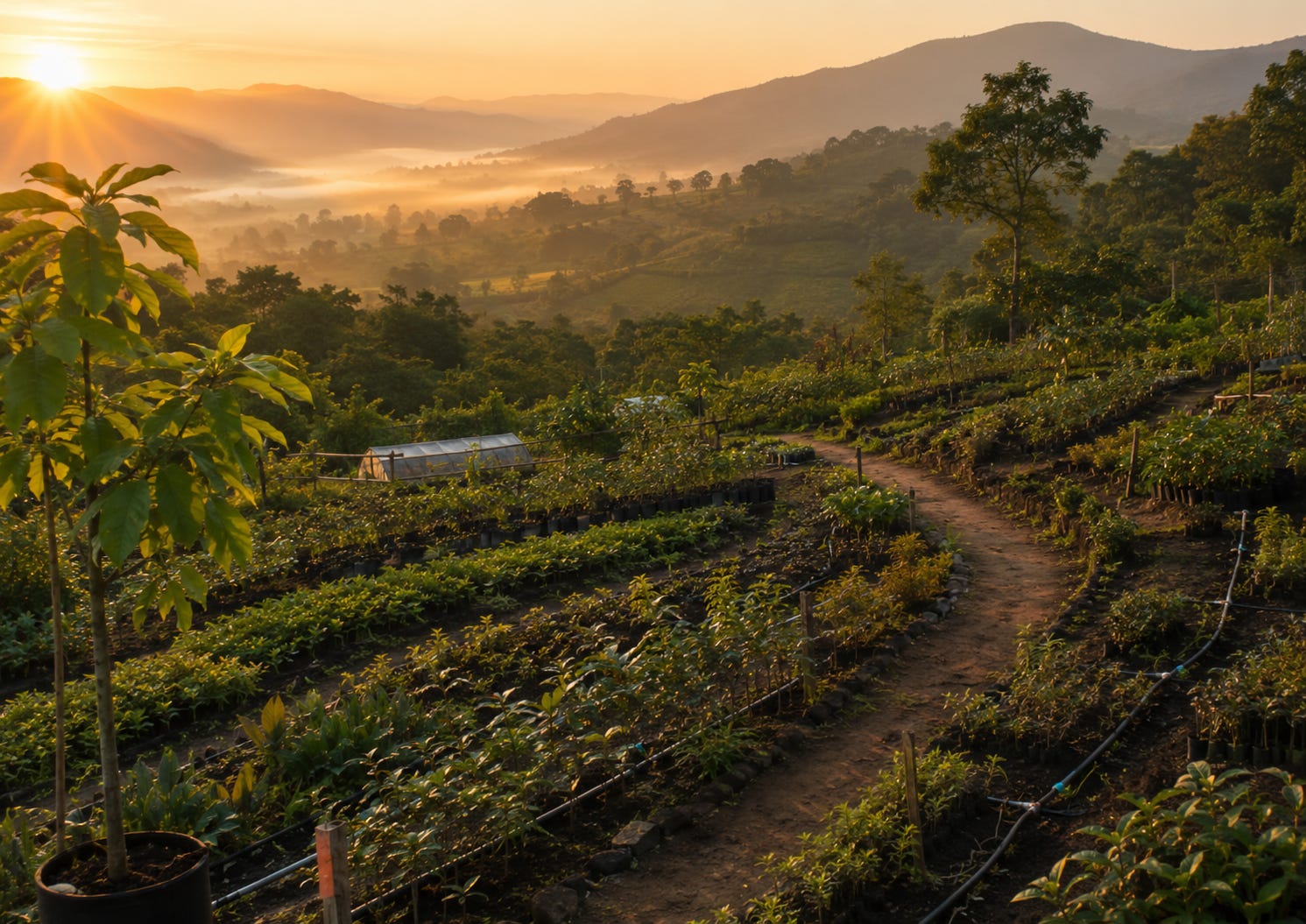
Cultivation is a useful metaphor because a gardener cannot command a seed to grow. Growth depends on the interaction of soil, water, light, climate, biodiversity, timing, and care. The gardener can influence those conditions but cannot fully control the result.
Future pathways behave similarly. We cannot engineer complex social, economic, technological, and ecological systems as though they were machines with predictable outputs. We can, however, shape the environments in which possibilities compete, cooperate, mature, and spread.
Cultivation is not certainty. It is preparation: making better futures less fragile before the moment arrives when they are urgently needed.
Hinge moments favor what is ready
Systems often appear stable until pressure creates an opening. A crisis disrupts familiar routines, an incumbent model loses legitimacy, a new technology changes what is possible, or a policy window opens. Pathways that once seemed marginal can suddenly become relevant.
But systems do not necessarily reorganize around the best idea in theory. They tend to reorganize around what is ready.
When disruption comes, decision-makers look for models that can be deployed, funded, governed, explained, and trusted. Communities turn to existing relationships and infrastructure. Institutions rely on familiar capabilities, even when those capabilities reproduce some of the problems that created the crisis.
If only extractive models are mature when an opening arrives, the system is likely to reproduce them in a new form. If higher-viability alternatives already have funding mechanisms, governance models, trusted networks, operational capabilities, and public legitimacy, the opening can lead to something different.
The future is often shaped before the decisive moment appears, through the slow work of preparing what will be available when the system begins searching for another path.
This is also why activity is not the same as leverage. Organizations can create pilots, launch innovation programs, form partnerships, and fund experiments without altering the conditions that determine whether a pathway becomes durable.
A regenerative agriculture pilot may prove that a model works. But unless financing, procurement, land access, insurance, and distribution also change, it may remain an isolated success.
The question is not simply whether action is happening. It is whether that action redirects resources, strengthens coordination, increases legitimacy, builds capability, or changes the rules and infrastructure surrounding the pathway.
The work after foresight is not to act everywhere. It is to identify where action can change what the system can become.
The future is already being cultivated
That work must remain a shared inquiry. No organization, institution, expert, or community can see the whole system. Viability cannot become a verdict handed down by those with the most capital or authority, nor should a preferred future escape scrutiny because its intentions are better.
The questions remain essential: viable for whom? Who benefits, and who carries the risk? Whose capacity is strengthened, and whose is depleted? What burdens are shifted beyond the boundary or time horizon being used to define success?
Legitimacy is not separate from viability. It is part of what allows a pathway to hold.
Every investment, policy, technology, institution, story, and organizational decision changes the conditions around emerging futures. Some choices make extractive pathways easier to scale. Others create room for more distributed, legitimate, adaptive, and life-supporting alternatives. Some strengthen the capacity of communities and ecosystems, while others quietly erode that capacity.
The question is not whether we are shaping the future. We are doing that already. The question is whether we are doing it consciously, and whether the pathways we strengthen can preserve and renew the conditions on which their own continuation depends.
Foresight helps us see what might happen. Viability helps us understand what can hold. Pathway Stewardship asks what we will help take root.
That is the work after foresight: not predicting the future, controlling it, or waiting for crisis to decide for us, but cultivating the conditions from which better futures can grow.
My Viable Futures Series
Article 2: What Possibility Chains Open Up
Article 3: What Makes A Future Pathway Viable?
Article 4: The Five Capacities of Viable Futures
Article 5: Pathway Stewardship
Article 6: Why Most Action Doesn’t Change the Future
Article 7: Who Decides Which Future Is Viable?
Article 8: The Resilience Trap
Article 9: The Work After Foresight
More of My Work
If you’re interested in exploring how to respond to systemic stress, not with collapse or control—but with coherence, you might also find value in:
Full Regenerative Possibility Chain Article Series: Read on Medium
Two things this week made me think of your Viable series, Dave. One, a new feature of our community-led clean-up crew https://www.byandby.org/ caught my attention, as it added the capability to drop a clean-up kit on your block. And, even louder (!), the article on Oregon's Gambler 500 rally... https://youtu.be/ivS-n7qabew?si=u9LATJIHEkP9NcA1 where ol' trucks are competitively re-purposed and besmirched landscapes are cleaned up. As these have staying power over recent years, they feel like part of an emerging Pathway. I see here capabilities, relationships, and cultural meaning.